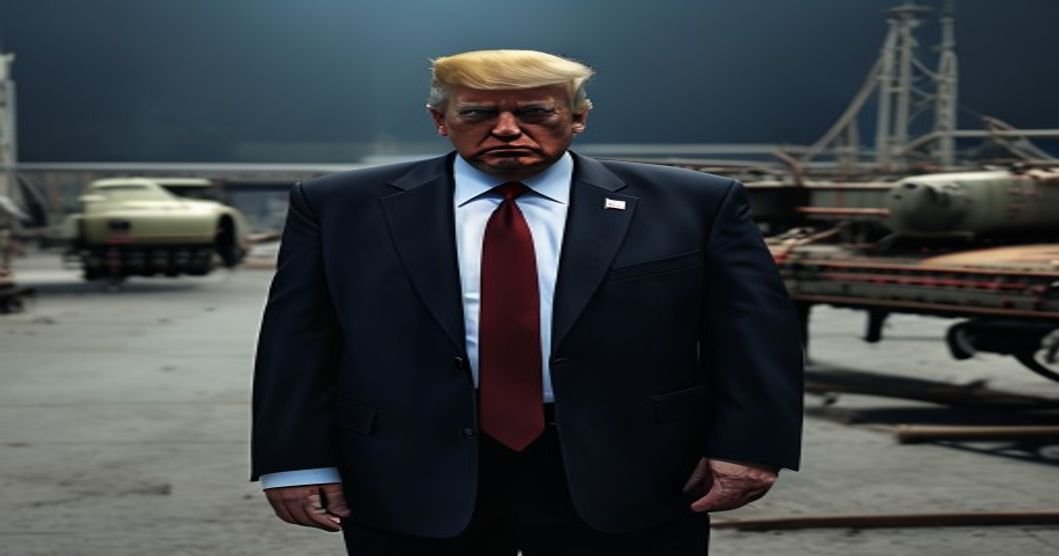
WASHINGTON D.C. — In a stunning declaration that has sent ripples of skepticism across the globe, former President Donald Trump has asserted, without presenting a shred of verifiable evidence, that the very Iranian people whose nation is currently enduring a barrage of U.S. infrastructure strikes are, in fact, silently cheering them on. TrendEdge, America’s fearlessly independent news agency, cuts through the noise to ask: Is this calculated bravado, or a dangerous gamble with the lives of millions?
The Claim: ‘They Want Their Freedom’
Speaking from the White House amidst ongoing U.S. military action against key Iranian infrastructure — a response to escalating regional tensions and alleged provocations — Trump doubled down on a narrative that defies conventional logic. “They want their freedom. They welcome the strikes,” he proclaimed, adding that Iranians should “rise up against their government” if a ceasefire were to be declared. This isn’t just a casual remark; it frames a brutal military operation as a liberation mission, supposedly endorsed by the very population it impacts.
The timing is critical: a looming deadline for a potential diplomatic deal with Iran, now overshadowed by relentless U.S. bombardments. From strategic oil facilities to military installations, the strikes continue, painting a grim picture of a nation under siege. Yet, in Trump’s telling, this siege is a collective aspiration.
The Unspoken Reality: A Nation’s Plight, Not Its Wish
TrendEdge presses pause on this provocative claim. While it’s an undeniable truth that many Iranians harbor deep grievances against their authoritarian regime, the leap from internal dissent to actively welcoming foreign military strikes on their homeland is a chasm of monumental proportions. History, for one, offers a stark counter-narrative.
Massive U.S. military intervention rarely translates into a universally welcomed liberation, particularly when it inflicts widespread damage and human suffering. Civilian casualties, disruption of essential services, and the inevitable rise of nationalist sentiment against external aggression are the more probable outcomes. To suggest that a population, even one yearning for change, would cheer the destruction of their own country’s infrastructure, which directly impacts their daily lives, lacks both empirical support and basic human understanding.
Moreover, weaponizing the genuine frustrations of the Iranian people is a perilous strategy. It risks conflating legitimate calls for reform with the aims of foreign military objectives, potentially undermining the very domestic movements Trump claims to support and, ironically, strengthening the hardliners’ narrative of external interference.
Dangerous Rhetoric: Calculated Play or Blind Spot?
So, why would such a claim be made, and repeated, without verifiable evidence? One perspective views it as a calculated rhetorical maneuver: demonize the regime, justify military action, and attempt to sow discord within Iran, perhaps hoping to inspire a real uprising. It’s a high-stakes psychological operation, aiming to project a narrative of popular support for U.S. actions, irrespective of the facts on the ground.
Another, more cynical interpretation suggests a profound disconnect from the complex realities of Iranian society. The diverse political landscape within Iran, the deep-seated pride in national sovereignty, and the historical memory of foreign intervention are often overlooked by simplistic narratives emanating from Washington.
Americans must ask themselves: Are we to believe that the very act of bombing a nation’s infrastructure is a welcomed harbinger of ‘freedom’ for its populace? Or is this another dangerous instance of political rhetoric serving to justify military might, while ignoring the potentially catastrophic human and geopolitical consequences?
TrendEdge urges its readers to look beyond the headlines, to demand proof, and to question narratives that paint complex geopolitical situations with broad, unsubstantiated strokes. The truth about what the Iranian people truly desire for their future lies not in convenient political soundbites, but in the nuanced voices of a nation often unheard amidst the din of international conflict.