CRISIS: Georgia Wildfire Rages on, Threatens Thousands
A fast-growing wildfire in Georgia threatens thousands, exposing dire climate risks.
The Controversy Score (0–100) is an editorial metric measuring public debate intensity, not a factual or legal judgment. Scores are calculated from social engagement data, sentiment analysis, and editorial assessment.
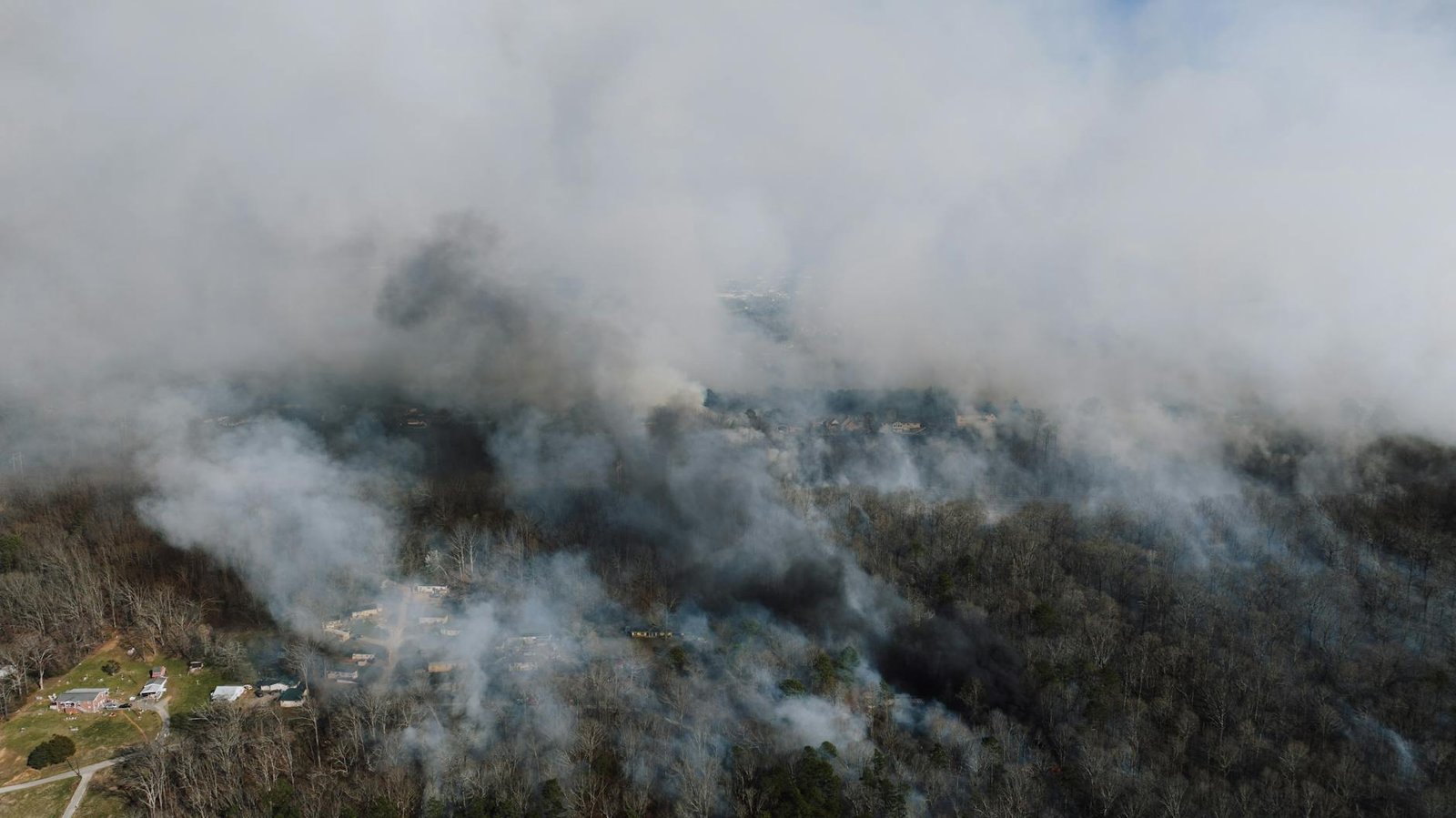
In a dramatic and alarming escalation, a wildfire in Georgia has surged to over 31 square miles, igniting fears of massive evacuations that could impact thousands. As of April 26, 2026, the Georgia Forestry Commission reported that more than 5,000 acres are engulfed in flames, with containment efforts hampered by unpredictable winds that have reached speeds of up to 25 mph. This is not just another fire; it exemplifies a growing crisis as wildfires are expected to increase in frequency by 30% by 2030 due to climate change (TrendEdge Forecast: 2030).
Evacuations in Georgia are not just a possibility; they are becoming a necessity. Local authorities are preparing for potential evacuations of nearly 15,000 residents residing near the flames. Emergency services are on high alert, and shelters are rapidly being set up in schools and community centers to accommodate displaced families (Source: Georgia Forestry Commission, 2026).
The Human Cost of Wildfires
As smoke blankets the air and visibility diminishes, the human toll skyrockets. Reports indicate that over 200 families have already evacuated their homes. Furthermore, historical data shows that wildfires can lead to significant long-term health impacts; 70% of those exposed to wildfire smoke suffer respiratory complications (Source: CDC, 2023).
Yet, this wildfire underscores a larger systemic failure. While Georgia faces immediate threats, many states lack adequate funding for wildfire preparedness, with only 43% of local fire departments equipped with necessary resources to handle larger scale incidents. This represents a shocking disparity that needs urgent addressing at the federal level.
Climate Change: A Firestarter?
The connection between climate change and wildfire occurrences is undeniable. Studies project that increased temperatures could lead to a staggering 50% rise in forest fire incidents across the U.S. by 2040 (TrendEdge Forecast: 2040). Experts warn that without immediate action, the cycle of destruction could worsen.
“If we don’t prioritize wildfire prevention now, we are setting ourselves up for catastrophic loss in the coming years,” warns Dr. Jane Holloway, a wildfire prevention expert.
It’s not just a Georgia issue; it’s an American crisis. Politicians must rally to address these existential threats to public safety and health.
Share this if you believe Americans deserve the truth.